Showing posts with label POND FILTER. Show all posts

Friday, November 20, 2009

Water Plants For Koi Pond

Are there practical reasons for growing aquatic plants? Nutrition is the first reason for success in Koi aquaculture. Plants as a food supplement supply this at the lowest cost. Five plants are the most common plants in water gardening and fish love them. Grow these plants in a protected area of the pond. This will allow the plants to produce vegetation faster than the fish can devour them.


Azolla (Azolla Caroliniana) .

Water Plant Azzola


Azolla Caroliniana, Water Plant For Koi Pond Filter


Azzola Caroliniana, this tiny floating plant is considered the smallest of the fern family. It is sometimes confused with Duckweed but actually looks very different. Duckweed has smooth bright green leaves and Azolla has crinkly rough textured leaves that are a darker sage-green in color and that develops a reddish tinge in bright sun. The two lobed leaves overlap in rows like fish scales. Threadlike roots hang down from the undersides of the leaves.

Azolla likes sun but will tolerate some shade. It likes moist, warm air and does not do well in an aquarium. It usually will not survive the winter if temperatures fall below 50 F. It grows very fast and can become a problem in a big pond unless you can net it out regularly. If you want to cover the surface of a smaller pond fast, it is a good choice. This will give protection for small fish from birds. Azolla is used in Panama and elsewhere to carpet water surfaces to prevent mosquitoes from laying eggs. Fish like to eat Azolla when the diet is not balanced.

Common Duckweed (Lemna Minor)


Common Duckweed


Common Duckweed, Water Plant For Koi Pond


This floating perennial is commonly mistaken for pond scum in natural ponds. If you look closely, you will see a thick carpet of tiny, individual bright green plants which are actually very attractive. Each small leaf (about 1/8" long) is a complete rooted plant which reproduces by budding, resulting in a chain of little, massed plants. It reproduces very rapidly but will be forced out by Azolla if grown together in a small container. It is an excellent food source for Koi and they do not get tired of feeding on Duckweed. To grow Duckweed in an aquarium, you need first to keep a sufficient amount out of the reach of your fish so it can reproduce. It prefers still or very slow moving regular aquarium water, florescent grow lights, and, if possible, a sealed environment to trap humid air. It will grow year around in this environment and you will be able to take out big clumps to feed your fish. Outside it will bleach out in full, direct sun so partial shade is ideal.

Anacharis (Elodea) is the most common and easily recognized submerged aquarium plant. It is a vigorous grower in the aquarium or pond and is an excellent oxygenator. It forms dense masses of foliage which can provide hiding places for fry Anacharis has short, dark-green lance-like leaflets whirled along the entire length of the brittle, branching stem. It spreads by runners and as the plant extends itself, the growth at the older end becomes yellow and loses leaves. This old growth can be pinched off leaving the healthy new growth Anacharis may flower for you.
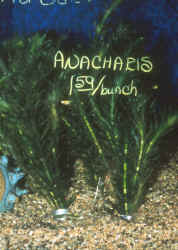

Anacharis
Anacharis/Elodea


These will be charming 1/4" white floating flowers on threadlike stems. Anacharis is very easy to grow and does not seem to have any special requirements except sufficient light. It grows better in potted soil or just left floating to form long roots that trail down in search of soil to anchor the plant. It needs to be brought inside from a pond at the end of the summer. The temperature should be no lower than 5 celcius to live through the winter.

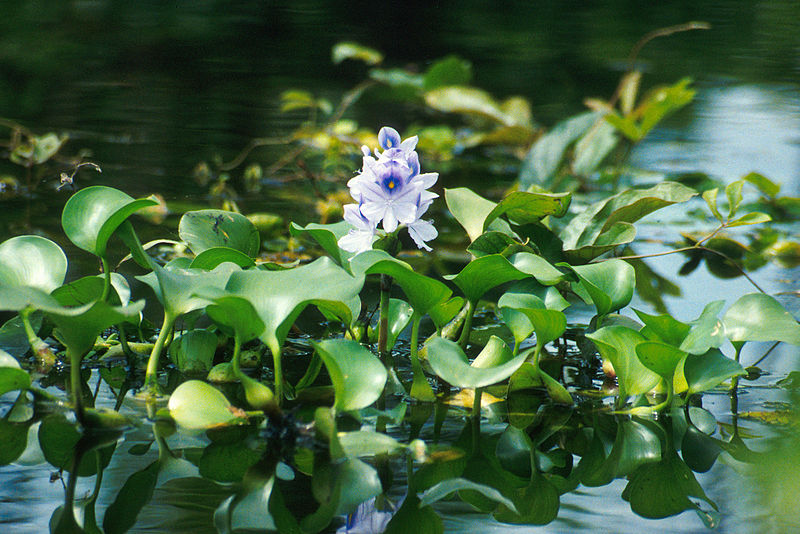
Water llyacinth (Eichhomia Crassipes) is a tropical floating plant with long, hanging roots which are the instinctively favorite spawning material of Koi and goldfish. Fortunately it is also a beautiful plant.


The shiny green leaves are on air-filled bulbous stems which are also filled with a spongy material that keeps the plants afloat. These leaves and stems spray outward from the center of the plant in a rosette shape. The Water Hyacinths flowers are similar to the Land Hyacinth. They look like a little purple orchid on a long stem coming from the center of the plant. The plants will flower more frequently if the roots touch bottom sediments.

Water Hyacinths need full sun. Each plant is l0"-12" tall. They are perennials. They can be wintered over indoors but they are fussy. They need lots of light, and moist air. Propagation is by runners at the water surface and is rapid. These are among the fastest growing plants in the world. In tropical areas they have cloggedwaterways and stopped navigation on rivers . Luckily, this should not be a problem in your pond unless you have a very large or natural pond.

Water Hyacinths pull nutrients out of the water at such a rate that they have been introduced in many areas to clean up foul, stagnant water. Water reclamation plants are experimenting with ammonia directly

Water Cress (Nasturtium Officinale) is a hardy annual that grows naturally in the soil on the banks of cool to cold streams and spring-fed ponds. It can be found all winter long in unfrozen, sheltered areas. This is the same Water Cress that is sold in grocery stores and used in restaurants. You can eat the leaves and stems that you grow. They have a very peppery taste. Waterfowl eat it and fish like it also. The small floating leaves are rounded, dark green and waxy. The branching stems can spread out for 2'-3' over the surface. Slender roots hang down from the nodes of the stems. It is a very good oxygenator.

It develops many small white flowers over the growing season. Plant in garden soil and put the pot by the edge of your pond with a couple of inches of water over the pot. It will do fine in an area of moving water. Water Cress will quickly form a mass of foliage and can outgrow a small pot within two months. You may see the root mass growing over the surface of the soil them as they take in growth of the plant may slow and become scraggly. Either re-pot the plant in a larger pot or chop out a big chunk of the plant and the root mass then fill the hole in with soil. Water Cress tolerates sun, shade or partial shade equally well.

It is easily grown frorn the tiny seeds found at any gardening center that has a decent seed selection. It is also a prolific re-seeder and will re-sow itself yearly. You can also start it from a freshly purchased bunch at the produce section of the grocery store. Make sure you can see the fine white roots on some of the stalks... Push these into wet soil and soon you will have enough Water Cress for all of the salads and sandwiches you could possibly want.


Source :
1. http://akca.org/library/wtrplant.htm
2. Pic From Wikipedia
Sunday, June 7, 2009

Koi Pond Filtration

koi pond filter
Pond water quality is the key to enjoying Koi pond, so it is better to have a smaller pond with superb filtration capability than to have a large pond with undersized filters. Good Pond Filter Design make good koi pond water quality. If we have good water quality Koi will growth well and beautifull. Koi pond filtration not difficult or complicated. It can be very frustrating, time-consuming, and labor-intensive though if it is not carefully planned ahead as part of the pond system. Many koi hobby neophytes simply go ahead with the construction of their ponds with little thought about how filtration shall be set up and maintained. Subsequently each of them realizes that an important feature of the pond system is missing and has to do with a makeshift one after the fact, resulting in an underpowered filter with a fraction of the capacity that it should have. Koi pond filtration is the process of removing waste products and other harmful compounds from the koi pond, it is a basic requirement of koi keeping.

Without koi pond filtration, several things can and will most likely happen:
1) Koi pond will turn green, rendering the pond fish invisible.
2) parasites and other harmful life forms will easily spread from one fish to another.
3) Koi pond will become unsightly and foul-smelling.
4) the pond will be poorly aerated; and worst of all.
5) the water quality can become deadly to its inhabitants, which may lead to a massive fish kill. This reasonable if koi Pond filtration needed for every koi keepers.


Basic Requirenment To Built Koi Pond Filter


1. Proper planning and setting up of the filtration system, for every koi pond built. It is best to have this done while the pond is still in its planning stages as well. If not , It will also result in more frequent and labor-intensive cleaning of the filters. Sooner or later, the hobbyist will shell out more funds in order to correct his poor filtration set-up. This is not to mention the potential loss of expensive koi due to poor filtration.If The Koi Pond not proper planing koi keeper must clean water manually almost every day to get clean water. You must prepare koi pond design before built it.

2.Filter Volume
Recommend a filter volume of not less than 33% of the total pond volume. If We have koi pond with 9000 gallon , filter must not leess than 3000 gallon.Koi Pond Filter can separated in several chamber.There are 3 chamber foltir, 4 chamber etc.

3. Water flow rate
Water flow rate is another important point to consider when designing a Koi pond filter. Filtering the water requires a way by which dirty water will be passed through the filters and delivered back to the koi pond as clean water 24 hours a day. This is achieved by using water pumps. When one speaks of the filter flow rate, what is referred to is the rate at which the pump moves the water through the filter. Recommend a filter flow rate equivalent to displacing the entire pond volume within one hour.
Example if Koi Pond 9000 gallon in one hours pump must flow water 9000 gallon via filter.The filter flow rate should be based on the actual rate at which water is taken out of and returned back to the koi pond, not on what the pump is labeled to be capable of.

4. Water Pump Selection
There are two type of pumps used in koi keeping, the submersible pump and the recirculating pump. For small ponds and water falls, submersible pumps are preferred because they are unobtrusive and silent by virtue of their being submerged underwater while operating.
For large ponds, however, recirculating pumps would be the wiser choice because of their efficiency and long life. Most koi experts recommend setting up two pumps of smaller capacities than buying just one pump of higher capacity to meet the flow rate requirements.


Pond Filter Structure and Equipment


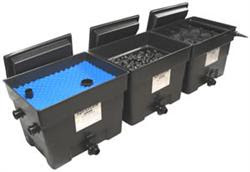
Pond Filter Example


Pic.2. Comercial Filter Structure


Once the filter capacity and pump flow rate have been established, the filtration stages must be designed. Filters work best if they consist of numerous stages, with each stage specially designed to accomplish a filtration task that the others can not. Having such specially-designed filter stages will allow all harmful wastes and debris to be removed effectively.
A filtration system usually has a couple of stages for mechanically filtering out suspended debris,
and another couple of stages for biological filtration of the water.

1. Mechanical filtration , consists of physically trapping the particulate wastes and debris in the water.
Sand, beads, pads, and brushes are the commonly-used materials for mechanical filtration. Passing the water through these materials traps whatever suspended materials are in the water, e.g., leaves, twigs, fish feces, etc. The first mechanical filter stage usually uses brushes as the trapping medium, because these only trap the relatively larger debris in the water, allowing the smaller ones to pass through.


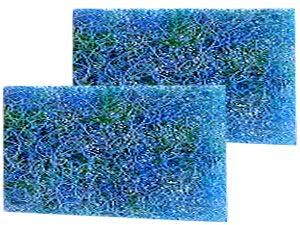
Filter Matt koi pond filter

Japan Filter Matt For Mechanical Koi Pond Filter


The second mechanical filter stage usually uses Japanese filter mats, beads, or sand to trap the smaller particles in the water. More mechanical filter stages may be added, with the trapping size getting smaller as the filter stages progresses.

2. Biological filtration, as the name implies, employs natural biological processes to convert the harmful wastes excreted by the koi and those produced by decaying plant matter in the pond into less invasive compounds.
Koi excrete ammonia, which is deadly to koi in large doses. Certain anaerobic (non-oxygen-breathing) bacteria convert ammonia into nitrites, which are, unfortunately, also poisonous to koi. The good thing is, there are 'good' aerobic (oxygen-breathing) bacteria that convert nitrites into nitrates, which are no longer deadly to koi.
These 'good' bacteria are also known as nitrifying bacteria. Nitrifying bacteria occur freely in nature, and will populate your pond in time.

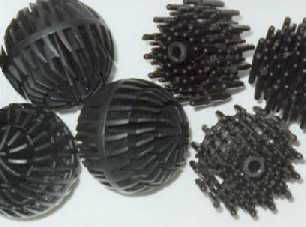
Bioball koi Pond biological Filter


Bioball as Biologicall Filter Koi Pond

Biological filters usually use bio-balls, sintered glass, porous rocks, ceramic rings, or synthetic high-surface area particles as filter media. Biological filter media are designed to have as much surface area as possible for a given volume, in order to maximize the good bacteria population within the filters.

3.Chemical Filtration
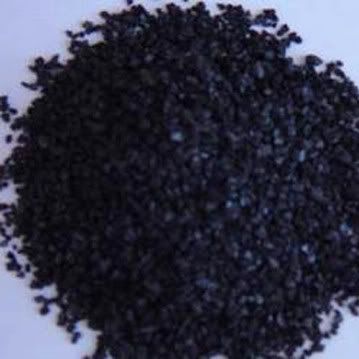
Chemical filters make use of activated carbon as a filtration media that helps absorb chemicals. The carbon used can be cleaned in salt water and reused again. It is important not to use salt water in your pond when using a chemical filter as it might release some of the ammonia. Chemical filtration involves purifying the koi pond water of harmful chemicals by chemically binding them to the filter media. This method of filtration is extremely useful to remove chlorine, pesticides, heavy metals, ammonia and other chemical impurities from the pond water. Chemical filters can help improve the pond clarity and remove pond odor.

activated carbon chemical filter koi pond


Activated Carbon as Chemical Filter Koi Pond


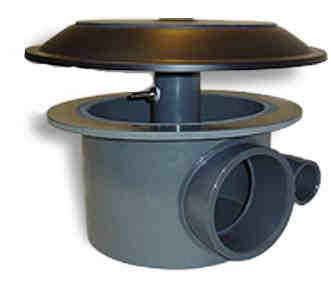
4. Bottom Drain

Bottom Drain For Koi Pond


Bottom Drain


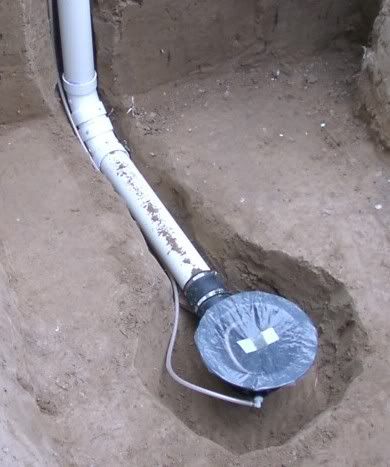
Bottom drain is a drain at the bottom of the pond where dirty water is sucked by the pump for transport to the filter chambers. The bottom drain is normally placed at the center of the koi pond, and should be the lowest point on the pond bottom. Thus, the entire pond bottom surface must slope towards the bottom drain. Pond with no bottom drain will need frequent cleaning of its floor.
Installed Bottom Drain in the koi Pond


Installing Bottom Drain to the pond


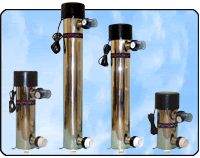
5. Ultraviolet Lamp
Ultraviolet lamp systems for killing algae may also be considered if green water is a persistent problem for you. In fact, many koi experts consider the uv sterilizer as a 'must-have' item for successful koi keeping .These are usually placed before the mechanical filters since uv light makes dead algae clump together. Not All Pond filter design need uv light to keep the water clear though, so you may want to go for this as well. If Biological Filter in the koi pond can't work in maksimum condition UV lamp can help reduce algae in our koi pond.
Uv lamp

Ultra Violet Lamp

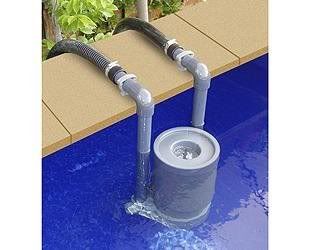
6. Surface Skimmer
Surface skimmers for removing wastes on the surface of the Koi pond will also be required by your pond. There are floating particle in the surface of koi pond from Koi feces, food etc. If not cleaned not good for water quality. Survae skimmer can remove it.
Surface skimmer


Floating Surface Skimmer Koi Pond


REFERENCE
1.Koiandpond
2.Abcpond
3.koicymru

Monday, May 25, 2009

Koi Living Jewels of the Orient, Good Reference For Koi Keepers

good koi type
This Koi Book presented in an easy to understand format, from the origins of the hobby to the present, and the pictures are spectacular.This book can get from Online Koi Book Store. It is full of beautiful pictures and has lots of useful information, but it is not as exhaustive a reference as it would seem from its size. Each variety of koi is beautifully represented, and the chapters on nutrition and water quality are enlighteningto us Koi are hardy fish, relatively large in size, and the most practical way to keep them is in an outdoor pond. Nishikigoi is familiar name for koi . Water pond quality influences koi development. Combining text with illustrations, an important section of the book explains the requirements of a garden pond for koi, showing the filtration system and pointing out how it functions. Water Filter very urgent for good pond design.The water quality chapter wastes entire pages on step-by-step instructions on how to use a particular brand of water test (they come with instructions,we don't need this in a book). The filtration chapter is devoted almost exclusively to a particular filtration system that chapter's author designs and sells.

Most of the book concentrates on koi themselves, focusing on a brief history of koi, advice on buying koi, the fish's physiology, health care, feeding, breeding koi, showing koi, and joining koi clubs. An 80-page section tells all about koi variations, and features color photos of more than 100 varieties. Illustrated two-page spreads review each variety's history, and show both their more desirable and less desirable color markings. Here is a beautifully designed and illustrated volume that emphasizes the special satisfactions of keeping and breeding koi. Approximately 450 color photos and illustrations.

Published 01 November 2002.
Published by Barron's Educational Series.
208 pages Hardcover.
ISBN: 0764154486
ISBN-13: 9780764154485

Table Of Content


Introduction to Part One p. 10
Koi keeping--the enduring hobby p. 12
Water quality p. 20
Filtration p. 36
Designing and building a koi pond p. 54
Physiology and health care p. 76
Buying koi p. 96
Feeding koi p. 102
Showing koi p. 108
Breeding koi p. 116

Introduction to Part Two p. 124
Kohaku p. 126
Sanke p. 134
Showa p. 140
Utsurimono p. 146
Bekko p. 152
Asagi and Shusui p. 156
Koromo p. 160
Kawarimono p. 166
Hikarimuji p. 174
Hikarimoyo p. 178
Hikari Utsuri p. 184
Kin-Gin-Rin p. 188
Tancho p. 190
Doitsu p. 194
Index and Credits p. 198
Table of Contents provided by Syndetics. All Rights Reserved.


Monday, May 18, 2009

Amount Of Fish In the Koi Pond

New Koi keeper habits place the fish in the koi pond in the number of lots.This is not a good habit, because too many fish in the pond will not grow well and can even die. The number of fish that inhabit in the pond will affect to the pond water quality. Good Pond Water quality will support koi fish grow to the optimum. Poor pond water quality make fish do not grow to the optimum condition. In addition to the number of fish,the other factors that affect to the quality of pond water are water filter, water pump and foods. In this opportunity we will study the number of fish in the pond.

To determine the amount of koi fish in the pond can be used formula as follows:

Number of fish = l x w: Fish Size: 150
l = Pond length (cm)
w = Pond Width (cm)

The size of the fish we will enter for example 10 cm
=
200 x 100: 10: 150

Number of Koi Fish = 13

Or with the table as follows:


Age of Koi(Year)Lenght of Koi (cm)depth of pond (cm)Amount Of Koi/4m2(fish)
1+- 1520-4040
2+- 303010
3-5more than 4030-452-5


This Terms not fixed standard,With good water filter, good pump system , and good pond design can be load in the amount more fish and stay with the optimal growth. Adding a waterfalls in the pond will improve water quality, because the waterfalls would result in more oxygen which is very useful for the koi fish.

Wednesday, May 6, 2009

Vortex Chamber For Koi Pond


Vortex chambers has recently become very popular that is used today and has been used as part of the main filtration system now for many years. The cone shape of the filter design aids in the settling of debris and ensuring gentle action of the dissolved waste throughout the filter process. Many People said they cannot work because it requires very high revolutions for sufficient centrifugal force to be generated. The efficiency of the unit does depend a lot on it's design, especially the diameter, height, and especially the positioning of the inlet and outlet pipes. The pumping rate can also be very important.

If you have any doubts about the efficiency of a vortex chamber then do try to visit a pond keeper that has one in use as I am sure you will be quite impressed with it.
Careful thought must be given to the correct size of your vortex chamber(s) when designing your koi pond, taking into account the necessary pump rate.

How Vortex System Operate


This rough sketch shows the basic idea for the Vortex chamber. The inlet from the bottom drain passes through the inlet just above the cone section of the chamber. The inlet is positioned so that the water flows around the side of the vortex, and then rises up and out through the outlet at the top, and then passes into the next chamber of the filter.
The solids will then fall to the bottom of the cone, and can then be flushed away several times a day.


Used as Primary chamber, fits into the filtration system as the 'First Line of Attack' ... and should be placed at the front end of the filtration system .. Normally the water from the bottom of the pond - together with waste and other debris is fed directly into this via the 4" or 110mm pipe from the Bottom Drain where it then adopts a 'spiral' motion inside the vortex chamber.


This allows the waste and debris to settle into the bottom of the vortex chamber where it then collects at the conical end of the vortex - waiting to be 'Flushed' via the Slide Valve which should be fitted to the external pipework that has been installed as part of the filtration system . Please note that for 'Gravity Fed' systems the water level in the pond should be no more than 1/2" from the Top edge of the Vortex Unit with the pump switched off. less if you can manage it. So if preparing a solid or concrete base for your Vortex units to stand on the base should be laid at the height of the vortex less 1/2"or less

Advantages to a Vortex Filter system

1.Vortex Filter Systems remove undisturbed solid waste before entering the pond's pump. The majority of other pond filter systems "puree" the solid waste from the bottom of the pond through the pump, creating a more heavier load for the filter system.

2.The Vortex System is an "open bed" allowing for atmospheric oxygen to interface with the surface water in the filter chambers, thereby acting as an oxygen supply safety net during power outages.

3. Closed, or pressurized filters, by design, can lose all of the dissolved oxygen present at any given moment in time if the flow is stopped. This process of oxygen depletion in many environmental cases can occur within an hour's time.

4. All systems have some unwanted, undesirable anaerobic environmental conditions which can "biologically bloom", given the circumstances. Example: a pressurized filter system operating at full capacity during hot weather conditions, loses its flow of water (and its source of dissolved oxygen).

5. The small population of anaerobic bacteria always present, but subdued can now flourish in an environment which is quickly becoming ideally suited for their populations to increase. As anaerobic populations increase, aerobic bacterial populations decrease. 6. When the pressurized filter begins to flow again, toxic waste products (hydrogen sulfide - rotten egg smell) from the now-active anaerobic bacteria flow into the pond.


Three Chamber Vortex


Exit the pond: The water should exit the pond (drain) from its deepest point, where most of the heavy debris will have settled. Obviously, the best thing to do is get rid of the heavy debris before transferring the remaining waste to the useful bacteria, in the biofilter. The water should be gravity-fed to the filter chambers. The flow rate should be low enough to allow the heavier solids to settle within the chamber and great enough to allow a complete water turnover every 2 hours or so. (The efficient match between pond design, pump selection and filtration system is essential.)

The first chamber: The water enters the settling chamber, which is shaped something like a cone, on a tangent to the cone and therefore begins to swirl in a vortex. This gentle swirling action encourages the heavy debris to sink to the bottom of the cone, where you can simply open the drain for ease of removal. The water then proceeds from the lower portion of the cone, wells up and exits through a port in the uppermost portion of the chamber.

The second chamber: The water then enters the second chamber, a prefilter. The prefilter contains filter media - such as filter brushes, which filters out some of the finer debris which gets by the first chamber. Now this filter media is likely to get rather mucky, in time, so it is beneficial that this filter brush media is light and easy to clean.

The third chamber: The water then proceeds in the same low to high path, past the baffle into the third chamber, the main biofilter. The main biofilter contains filter media which millions of bacteria call home. Here's where the dissolved waste products, primarily ammonia, meet the bacteria. The main portion of the nitrogen cycle takes place here.


Example Pond Design With Vortex System


REFERENCE:
1. http://www.koicymru.co.uk
2. http://www.aquaart.com
3. http://www.koiofindonesia.com
4. http://www.koifooddirect.co.uk