Koi Fish and garden ponds are naturally heated up by the sun. Ponds with large volumes of water and/or deep water will take longer to heat up. Furthermore, water requires a lot of energy to heat it up so it will take many days of hot sun before a pond’s temperature warms up. Conversely, the pond will keep its temperature for several weeks after the first cold snap of autumn. Koi Fish , like all fish, cannot control their body temperature, so whatever the water temperature is will be the temperature of fish, too.
Koi are naturally warm-water fish and, in the UK, they are on the edge of their tolerable conditions. Unsurprisingly, they visibly respond to warm water and all their natural processes are geared to temperatures around 18–22°C (such as breeding, digestion and growth). Koi are much more active and responsive when it’s warm, leading many people to artificially heat their ponds.
High temperatures are not without their problems, though. Warm water holds less oxygen than cold water (see the Dissolved oxygen section), but because all the processes in a Koi are going faster when the fish is warm, its need for oxygen is greater. Therefore, in warm water, Koi can have oxygen shortages and might come to the top of the pond (where there is relatively more oxygen) to breathe. Also, in warm water some pollutants (see the Ammonia, nitrite and nitrate section) are more toxic and more likely to poison fish.
Cold water, of course, will contain more oxygen and some toxins are less harmful, but Koi will naturally slow down as it gets colder. Below 10°C, a Koi’s systems are on ‘tick over’. It will not digest particularly well so it feeds less. Its immune system, which protects a Koi against disease-causing organisms, is very limited in cold water so outbreaks can occur.
Heating a pond does keep fish more active for the whole of the year. It also means they grow all-year round. On the other hand, it is expensive and it is not an environmentally sound practice. If you do decide to heat your pond, make sure the fish have a cool period for a month or so in the winter because this lets a Koi’s body clock set itself to the natural seasons.
Source:
http://www.koimag.co.uk/advice/water-quality/koi-pond-water-temperature
Showing posts with label POND WATER. Show all posts
Showing posts with label POND WATER. Show all posts
Tuesday, April 6, 2010
Wednesday, November 25, 2009
Ammonia Water Test Kit
Ammonia produced from fish waste & urine, uneaten fish food, decaying plants, and dead insects. In a large amount of ammonia will cause Koi Fish death. High concentration Ammonia in the Pond water will cause the water to be green. So koi keeper needs to detect the ammonia disolved in the water every time with Ammonia Test Kit. An ammonia test kit is considered to be a requirement for all pond keepers. If the ammonia test result was detected in high level , cleaning water needs to be done soon. Cleaning water from ammonia can do by change water partially or good filtration system.
Two types of ammonia test kits are commonly available.
1. Based on the Nessler reagent.
This kit normally uses drops in a water sample with an associated color chart. The Nessler kit provides a faster test but is not compatible with any ammonia treatment chemicals that may be in the water. Nessler kit color chart normally ranges : From clear, meaning no ammonia, to yellow/yellowish-orange as ammonia levels increase.
2. Salicylate Reagent test
Salicylate Reagent Test may use drops, powders, or pills and is usually a two step process again followed by a color chart.The salicylate based test kit ranges from a light yellow, meaning no ammonia, to green/bluish-green as ammonia levels increase.
Both types read the total of ammonia and ammonium, so without knowing the temperature and pH, the toxicity cannot be determined. Suffice it to say that the only good ammonia reading is zero. But note that any pond containing fish will have some residual ammonia. The bio-converter does not remove all of it each pass and the fish continuously add it to the pond. The residual level will be determined by the fish load, the effectiveness of the bio-converter, and how often the water is passed through it. This residual level should not be detectable on the average test kit. The recommended test kit should be able to detect 0-1 ppm of ammonia.
Example Ammonia Test Kit
1. Ammonia Test Kit.
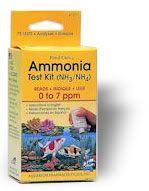
Determines the level of ammonia in koi pond, a toxic chemical being constantly produced in the pond from fish waste, uneaten fish food, decaying plants & dead algae.
- Reads ammonia levels from 0 ppm to 7 ppm
- Kit includes a bottle of test solution, glass test tube with cap, instructions & color chart
- Performs 75 tests
2. Ammonia Allert
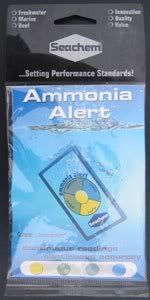
Ammonia Alert in-tank test system is an innovative color device for continuously detecting and monitoring toxic free ammonia. A sensor changes reversibly from yellow to green to blue, relative to the ammonia concentration.
No test kits, chemicals, or procedures are needed. The device detects less than 0.05 mg-L (ppm) free ammonia and alerts you to the No. 1 killer before any sign of stress. it lasts over a year and replacement sensors are available. Marine or freshwater use.
3.CalPump Ammonia Test Monitor
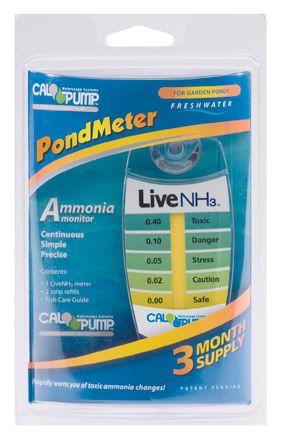
- Contains a Ammonia Master Sensor with 3 Months Supply
- Easy to use
- Suction cup included or use a string to tether in pond or skimmer
- Allows you to monitor your pond water for Ammonia without having to use liquids or strips.
- Just view the monitor and it will give you a constant read.
4.NT Pond Lab Ammonia Test kit.
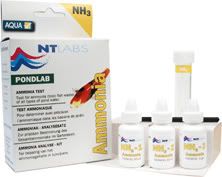
NT Pond Lab Ammonia Test kit Comprises 30 tests .
5.Ammonia Aqua Sensor
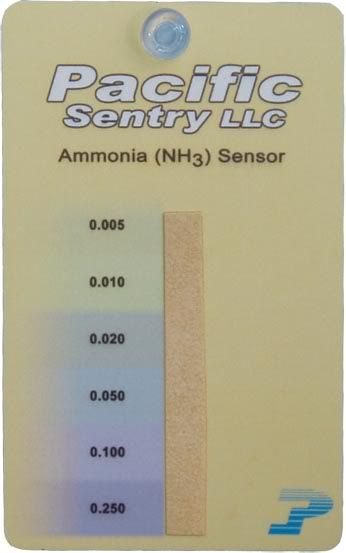
Pacific Sentry’s ammonia aqua sensor enables visual monitoring of toxic ammonia (NH3) in aquaria water on a continuous basis. Simply attach it in a visible location where it can be left and easily viewed, with the sensor pad completely immersed. With initial use, wait about 15 minutes for the sensor to hydrate before making first reading. Thereafter they respond quickly (1-5 minutes) to NH3. To get a measurement, simply match the sensor’s color to the color-gradient indicator chart to readout the NH3 concentration.
Reference:
1. http://koiclubsandiego.org
2. http://www.nbponds.com
3. http://www.123ponds.com
4. http://www.koilogic.co.uk
5. http://www.pacificsentry.com
Tuesday, November 24, 2009
Water Quality For Best Koi Growth
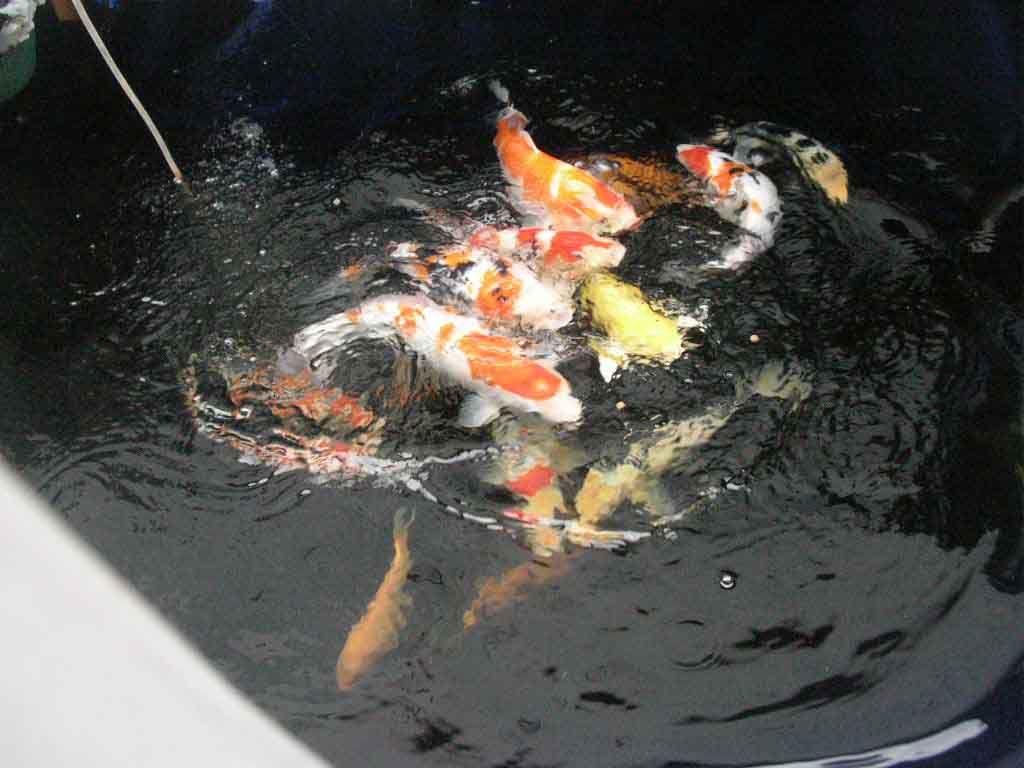
Koi growth, health and color of are dependent on water condition, the first thing to suspect koi fish problem is water quality. Good water quality comes from the perfect koi pond filter. Daily checking for water quality in the koi pond is very important for the health of Koi. Fresh water are used by some Koi keepers without a Filtration system, but a large amount of fresh water should not be put into the pond at one time. If a quantity of fresh water is entering the pond, the Koi's body system has to adjust to the new water condition. A loss of shine and color fading can be a result of excessive water changes. Carp like to live in the same water condition and environment.
Otherwise water circulated for a long time without change becomes aged and can cause small bubbles and scum in the pond. Most purification systems cannot eliminate 100% of the harmful chemicals such as ammonia. It is suggested that 5% to 20% of the pond water should be exchanged every week and fresh water added. This fresh water should be added in small amounts on a continuous basis, 24 hours a day, to prevent a major environmental change in the pond.
Water Quality Parameter and Koi Behaviour
Water quality can determined by looking at some of the parameters in the water and abnormal behaviour of the fish. Characteristics that appear from Koi behavior of fish is:
- If all the Koi are swimming all over the pond area that is an indication that they are healthy.
- If there any scum on the water surface and are many small bubbles forming, suggest the water is very old or the biological purification system is not working effectively.
- If Koi gathering at the waterfall area indicates that the water is lacking in oxygen content.
- If Koi accumulating in one area and some of them scratching their sides at the pond edges, there is a possibility they are having problems with parasites and the pond should be treated imediately.
1. PH
PH is the single most important water quality parameter. It can affect the toxicity and quantity of several of the other components of koi pond water. Koi can live in a wide range of pH, but 7.2 to 7.8 is ideal. To lower the pH of your pond you can add a water softener, try reverse osmosis, and decrease splash aeration by by-passing the waterfall. To raise pH increase splash aeration, add oyster shells, or lime.
2. Ammonia
Ammonia is toxic to koi fish. As pH increases above 7, the amount of ammonium transformed into ammonia is exponentially
related to the pH. A test for ammonia with water test kits should always read 0.0 PPM. To reduce the toxic ammonia content, make a water change but be sure to add a dechlorinator, decrease feeding amount, add zeolite (never combine with salt additions), reduce fish load, add more filtration area, add a commercially prepared ammonia remover.
3. Nitrites/Nitrous Acid
Nitrites/Nitrous is the first steps in the Nitrogen Cycle. Nitrous Acid (HNO2-) is the by-product of Nitrosomonas bacteria breaking down ammonium in acid water. As pH decreases below pH 7, the amount of nitrous acid increases and becomes more toxic. To reduce toxic nitrous acid, make water changes, reduce the fish load, reduce the feeding amounts or adjust the pH. Add salt at the rate of 0.2% to inhibit the intake by the fish of nitrous acid. A test for these molecules should read 0.0 PPM.
4. Nitrates/Nitric Acid
Nitrates/Nitric Acid is the second step in the Nitrogen Cycle. Unless found in large quantities, both are considered non toxic. To control the amount of nitrates and nitric acid, make water changes or add plants.
5. Water Hardness
Hard water is due to an abundant number of salts such as calcium and magnesium. Koi can cope with a wide range of hardness. There are two major benefits to having hard water in your Koi pond. First, very hard water can bind some toxic metals such as lead. Secondly, hard water reduces the workload of the koi for osmoregulatory functions. A reading of 0 to 75 PPM is considered soft, from 75 to 150 PPM is moderately hard, from 150 to 300 PPM is hard and above 300 PPM is very hard. If it is necessary to increase your hardness you can add crushed oyster shells, coral or any substance that will increase the amount of calcium.
6. Total Alkalinity/ Temporary Hardness
A large amount of bicarbonates in the water will result in a high Total Alkalinity reading. Also knows as 'buffers', these bicarbonates dissociate and then combine with the Hydrogen ions produced by the Nitrogen Cycle and the other acids produced by the fish and organic decomposition. When Total Alkalinity is low, or is 'used', the water will become more and more acid. Combining a low Total Alkalinity with submerged plants or algae can cause a day time alkaline pH and a night time acid pH. This 'pH shift' is stressful to your fish and can lower their resistance to disease if the situation continues. Total alkalinity should be kept above 80 PPM to avoid these potentially dangerous shifts. To increase alkalinity, add sodium bicarbonate, change the water or add a commercially prepared pH Buffer.
7. Temperature
Temperature should be monitored for both daily and seasonal extremes. Temperature affects dissolved oxygen levels, respiration, metabolic rate, pH balance, free ammonia\ionized ammonia ratio and osmoregulation. Koi can tolerate a broad range of temperatures, from ponds that are iced over; to water up to 90F, better than they can tolerate sudden shifts in temperature.
Water temperature has an inverse relationship to the amount of oxygen contained in that water. The higher the water temperature, the lower the oxygen saturation level. The 'saturation level' is the maximum amount of oxygen in water at a given temperature. Water temperature also affects the metabolic rates of the fish. Fish, being cold blooded, slow their bodily functions as temperature decreases. This affects all circulatory systems. If you need to reduce the temperature of your water you can add more shade, add a misting system, bypass the waterfall during the day and utilize the waterfall only at night. To increase your water temperature, add a heater, bypass the waterfall at night and reduce the shade.
8. Oxygen
Oxygen is needed for the normal day to day functions of a fish and by the bacteria necessary for the breakdown of the fish's waste products in the nitrification process. Factors affecting the amount of oxygen in the water are temperature, fish load, organic load, medications, and the turn over rate. All of these factors affect oxygen inversely except the turn over rate. Minimum levels of oxygen should be 5 PPM. To increase the oxygen content, add venturis, increase the turnover rate, reduce the organic load (rid the pond of any organic matter that is sitting on the bottom). Do not add aquatic plants, they will use oxygen at night.
9. Carbon Dioxide
Carbon Dioxide product of koi fish respiration.To decrease the amount of carbon dioxide, add plants or increase bubble aeration. To increase Carbon Dioxide, remove plants and decrease bubble aeration.
10.Chlorine & Chloramines
11.Toxic Metals
Most natural waters contain chloride, sulfate, carbon, calcium, magnesium, sodium and potassium. These ions serve a vital purpose in the mineral metabolism of all animals. If these ions are found in high concentrations, their toxicity is dependent on water hardness, pH, temperature and the presence of other dissolved substances. The solubility and toxicity of zinc, lead, aluminum and copper have a direct relationship to increases of pH and water hardness. To remove heavy metals, use activated carbon filtration.
12. Organic Compounds
Oil and grease, organic carbons, phenolic compounds, and detergents are included in this group. Much of the pollution from these organic compounds is due to runoff entering the pond. Make water changes.
13.Other Toxic Gases
Hydrogen sulfide is the result of anerobic bacterial action on organic matter in the pond. Ozone is being used to disinfect water in some areas. Make water changes and clean out the mulm under the filter or in the bottom of koi pond.
14. Pesticides & Insecticides & Herbicides
These are usually introduced into the pond by runoff, precipitation or accidental spills. Make water changes.
Source:
1.Akca Library
Otherwise water circulated for a long time without change becomes aged and can cause small bubbles and scum in the pond. Most purification systems cannot eliminate 100% of the harmful chemicals such as ammonia. It is suggested that 5% to 20% of the pond water should be exchanged every week and fresh water added. This fresh water should be added in small amounts on a continuous basis, 24 hours a day, to prevent a major environmental change in the pond.
Water Quality Parameter and Koi Behaviour
Water quality can determined by looking at some of the parameters in the water and abnormal behaviour of the fish. Characteristics that appear from Koi behavior of fish is:
- If all the Koi are swimming all over the pond area that is an indication that they are healthy.
- If there any scum on the water surface and are many small bubbles forming, suggest the water is very old or the biological purification system is not working effectively.
- If Koi gathering at the waterfall area indicates that the water is lacking in oxygen content.
- If Koi accumulating in one area and some of them scratching their sides at the pond edges, there is a possibility they are having problems with parasites and the pond should be treated imediately.
Water Parameter In The Koi Pond
1. PH
PH is the single most important water quality parameter. It can affect the toxicity and quantity of several of the other components of koi pond water. Koi can live in a wide range of pH, but 7.2 to 7.8 is ideal. To lower the pH of your pond you can add a water softener, try reverse osmosis, and decrease splash aeration by by-passing the waterfall. To raise pH increase splash aeration, add oyster shells, or lime.
2. Ammonia
Ammonia is toxic to koi fish. As pH increases above 7, the amount of ammonium transformed into ammonia is exponentially
related to the pH. A test for ammonia with water test kits should always read 0.0 PPM. To reduce the toxic ammonia content, make a water change but be sure to add a dechlorinator, decrease feeding amount, add zeolite (never combine with salt additions), reduce fish load, add more filtration area, add a commercially prepared ammonia remover.
3. Nitrites/Nitrous Acid
Nitrites/Nitrous is the first steps in the Nitrogen Cycle. Nitrous Acid (HNO2-) is the by-product of Nitrosomonas bacteria breaking down ammonium in acid water. As pH decreases below pH 7, the amount of nitrous acid increases and becomes more toxic. To reduce toxic nitrous acid, make water changes, reduce the fish load, reduce the feeding amounts or adjust the pH. Add salt at the rate of 0.2% to inhibit the intake by the fish of nitrous acid. A test for these molecules should read 0.0 PPM.
4. Nitrates/Nitric Acid
Nitrates/Nitric Acid is the second step in the Nitrogen Cycle. Unless found in large quantities, both are considered non toxic. To control the amount of nitrates and nitric acid, make water changes or add plants.
5. Water Hardness
Hard water is due to an abundant number of salts such as calcium and magnesium. Koi can cope with a wide range of hardness. There are two major benefits to having hard water in your Koi pond. First, very hard water can bind some toxic metals such as lead. Secondly, hard water reduces the workload of the koi for osmoregulatory functions. A reading of 0 to 75 PPM is considered soft, from 75 to 150 PPM is moderately hard, from 150 to 300 PPM is hard and above 300 PPM is very hard. If it is necessary to increase your hardness you can add crushed oyster shells, coral or any substance that will increase the amount of calcium.
6. Total Alkalinity/ Temporary Hardness
A large amount of bicarbonates in the water will result in a high Total Alkalinity reading. Also knows as 'buffers', these bicarbonates dissociate and then combine with the Hydrogen ions produced by the Nitrogen Cycle and the other acids produced by the fish and organic decomposition. When Total Alkalinity is low, or is 'used', the water will become more and more acid. Combining a low Total Alkalinity with submerged plants or algae can cause a day time alkaline pH and a night time acid pH. This 'pH shift' is stressful to your fish and can lower their resistance to disease if the situation continues. Total alkalinity should be kept above 80 PPM to avoid these potentially dangerous shifts. To increase alkalinity, add sodium bicarbonate, change the water or add a commercially prepared pH Buffer.
7. Temperature
Temperature should be monitored for both daily and seasonal extremes. Temperature affects dissolved oxygen levels, respiration, metabolic rate, pH balance, free ammonia\ionized ammonia ratio and osmoregulation. Koi can tolerate a broad range of temperatures, from ponds that are iced over; to water up to 90F, better than they can tolerate sudden shifts in temperature.
Water temperature has an inverse relationship to the amount of oxygen contained in that water. The higher the water temperature, the lower the oxygen saturation level. The 'saturation level' is the maximum amount of oxygen in water at a given temperature. Water temperature also affects the metabolic rates of the fish. Fish, being cold blooded, slow their bodily functions as temperature decreases. This affects all circulatory systems. If you need to reduce the temperature of your water you can add more shade, add a misting system, bypass the waterfall during the day and utilize the waterfall only at night. To increase your water temperature, add a heater, bypass the waterfall at night and reduce the shade.
8. Oxygen
Oxygen is needed for the normal day to day functions of a fish and by the bacteria necessary for the breakdown of the fish's waste products in the nitrification process. Factors affecting the amount of oxygen in the water are temperature, fish load, organic load, medications, and the turn over rate. All of these factors affect oxygen inversely except the turn over rate. Minimum levels of oxygen should be 5 PPM. To increase the oxygen content, add venturis, increase the turnover rate, reduce the organic load (rid the pond of any organic matter that is sitting on the bottom). Do not add aquatic plants, they will use oxygen at night.
9. Carbon Dioxide
Carbon Dioxide product of koi fish respiration.To decrease the amount of carbon dioxide, add plants or increase bubble aeration. To increase Carbon Dioxide, remove plants and decrease bubble aeration.
10.Chlorine & Chloramines
11.Toxic Metals
Most natural waters contain chloride, sulfate, carbon, calcium, magnesium, sodium and potassium. These ions serve a vital purpose in the mineral metabolism of all animals. If these ions are found in high concentrations, their toxicity is dependent on water hardness, pH, temperature and the presence of other dissolved substances. The solubility and toxicity of zinc, lead, aluminum and copper have a direct relationship to increases of pH and water hardness. To remove heavy metals, use activated carbon filtration.
12. Organic Compounds
Oil and grease, organic carbons, phenolic compounds, and detergents are included in this group. Much of the pollution from these organic compounds is due to runoff entering the pond. Make water changes.
13.Other Toxic Gases
Hydrogen sulfide is the result of anerobic bacterial action on organic matter in the pond. Ozone is being used to disinfect water in some areas. Make water changes and clean out the mulm under the filter or in the bottom of koi pond.
14. Pesticides & Insecticides & Herbicides
These are usually introduced into the pond by runoff, precipitation or accidental spills. Make water changes.
Source:
1.Akca Library
Friday, November 20, 2009
Water Plants For Koi Pond
Are there practical reasons for growing aquatic plants? Nutrition is the first reason for success in Koi aquaculture. Plants as a food supplement supply this at the lowest cost. Five plants are the most common plants in water gardening and fish love them. Grow these plants in a protected area of the pond. This will allow the plants to produce vegetation faster than the fish can devour them.
Azolla (Azolla Caroliniana) .


Azolla (Azolla Caroliniana) .
Azolla Caroliniana, Water Plant For Koi Pond Filter
Azzola Caroliniana, this tiny floating plant is considered the smallest of the fern family. It is sometimes confused with Duckweed but actually looks very different. Duckweed has smooth bright green leaves and Azolla has crinkly rough textured leaves that are a darker sage-green in color and that develops a reddish tinge in bright sun. The two lobed leaves overlap in rows like fish scales. Threadlike roots hang down from the undersides of the leaves.
Azolla likes sun but will tolerate some shade. It likes moist, warm air and does not do well in an aquarium. It usually will not survive the winter if temperatures fall below 50 F. It grows very fast and can become a problem in a big pond unless you can net it out regularly. If you want to cover the surface of a smaller pond fast, it is a good choice. This will give protection for small fish from birds. Azolla is used in Panama and elsewhere to carpet water surfaces to prevent mosquitoes from laying eggs. Fish like to eat Azolla when the diet is not balanced.
Common Duckweed (Lemna Minor)
Common Duckweed, Water Plant For Koi Pond
This floating perennial is commonly mistaken for pond scum in natural ponds. If you look closely, you will see a thick carpet of tiny, individual bright green plants which are actually very attractive. Each small leaf (about 1/8" long) is a complete rooted plant which reproduces by budding, resulting in a chain of little, massed plants. It reproduces very rapidly but will be forced out by Azolla if grown together in a small container. It is an excellent food source for Koi and they do not get tired of feeding on Duckweed. To grow Duckweed in an aquarium, you need first to keep a sufficient amount out of the reach of your fish so it can reproduce. It prefers still or very slow moving regular aquarium water, florescent grow lights, and, if possible, a sealed environment to trap humid air. It will grow year around in this environment and you will be able to take out big clumps to feed your fish. Outside it will bleach out in full, direct sun so partial shade is ideal.
Anacharis (Elodea) is the most common and easily recognized submerged aquarium plant. It is a vigorous grower in the aquarium or pond and is an excellent oxygenator. It forms dense masses of foliage which can provide hiding places for fry Anacharis has short, dark-green lance-like leaflets whirled along the entire length of the brittle, branching stem. It spreads by runners and as the plant extends itself, the growth at the older end becomes yellow and loses leaves. This old growth can be pinched off leaving the healthy new growth Anacharis may flower for you.
Anacharis/Elodea
These will be charming 1/4" white floating flowers on threadlike stems. Anacharis is very easy to grow and does not seem to have any special requirements except sufficient light. It grows better in potted soil or just left floating to form long roots that trail down in search of soil to anchor the plant. It needs to be brought inside from a pond at the end of the summer. The temperature should be no lower than 5 celcius to live through the winter.
Water llyacinth (Eichhomia Crassipes) is a tropical floating plant with long, hanging roots which are the instinctively favorite spawning material of Koi and goldfish. Fortunately it is also a beautiful plant.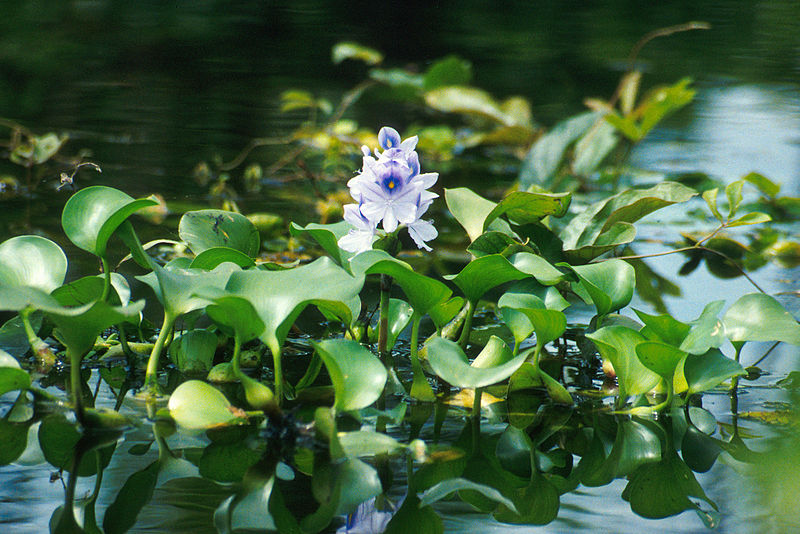
The shiny green leaves are on air-filled bulbous stems which are also filled with a spongy material that keeps the plants afloat. These leaves and stems spray outward from the center of the plant in a rosette shape. The Water Hyacinths flowers are similar to the Land Hyacinth. They look like a little purple orchid on a long stem coming from the center of the plant. The plants will flower more frequently if the roots touch bottom sediments.
Water Hyacinths need full sun. Each plant is l0"-12" tall. They are perennials. They can be wintered over indoors but they are fussy. They need lots of light, and moist air. Propagation is by runners at the water surface and is rapid. These are among the fastest growing plants in the world. In tropical areas they have cloggedwaterways and stopped navigation on rivers . Luckily, this should not be a problem in your pond unless you have a very large or natural pond.
Water Hyacinths pull nutrients out of the water at such a rate that they have been introduced in many areas to clean up foul, stagnant water. Water reclamation plants are experimenting with ammonia directly
Water Cress (Nasturtium Officinale) is a hardy annual that grows naturally in the soil on the banks of cool to cold streams and spring-fed ponds. It can be found all winter long in unfrozen, sheltered areas. This is the same Water Cress that is sold in grocery stores and used in restaurants. You can eat the leaves and stems that you grow. They have a very peppery taste. Waterfowl eat it and fish like it also. The small floating leaves are rounded, dark green and waxy. The branching stems can spread out for 2'-3' over the surface. Slender roots hang down from the nodes of the stems. It is a very good oxygenator.
It develops many small white flowers over the growing season. Plant in garden soil and put the pot by the edge of your pond with a couple of inches of water over the pot. It will do fine in an area of moving water. Water Cress will quickly form a mass of foliage and can outgrow a small pot within two months. You may see the root mass growing over the surface of the soil them as they take in growth of the plant may slow and become scraggly. Either re-pot the plant in a larger pot or chop out a big chunk of the plant and the root mass then fill the hole in with soil. Water Cress tolerates sun, shade or partial shade equally well.
It is easily grown frorn the tiny seeds found at any gardening center that has a decent seed selection. It is also a prolific re-seeder and will re-sow itself yearly. You can also start it from a freshly purchased bunch at the produce section of the grocery store. Make sure you can see the fine white roots on some of the stalks... Push these into wet soil and soon you will have enough Water Cress for all of the salads and sandwiches you could possibly want.
Source :
1. http://akca.org/library/wtrplant.htm
2. Pic From Wikipedia
Tuesday, November 3, 2009
Disolved Oxygen in The Koi Pond
Oxygen is essential for koi growth, More fish die from a lack of oxygen than any other cause. Koi Keeper should always monitor the actual disolved oxygen in the water every time. Disolved oxygen in the water should 't less than the required by koi fish. Oxygen levels can only be determined by measurement with a water test kit or an oxygen meter like as Ammonia test kit. Submerged plants and algae take oxygen out of the water at night. Their effect can be significant when you have green water in the koi pond. In Warm water koi increased consume oxygen.
During daylight, plants do photosynthesis. This is the reaction of taking in CO2 and expelling O2. Sounds perfect for our pets. But at night, the reverse happens – respiration. The plants take up O2 and expel CO2. So run your pumps 24/7. Do Not Turn Off The Pump At Night, THE KOI’S LIFE DEPENDS ON IT, As the night passes and daylight is on the horizon, the buildup of CO2 is at its highest point. This CO2 combines with the free hydrogen ions in the water and becomes acidic, driving the pH down.
Oxygen Levels in the koi pond
* Warm water saturation is about 8 ppm
* Continuous healthy minimum is about 6 ppm
* Low level stress and poor feeding response 4-5 ppm
* Acute stress, no feeding, inactivity 2-4 ppm
* Death 1-2 ppm
Solution to increased disolved oxygen in the koi pond
Aeration is the term that we use to mean adding air to the water. Since air contains 22% oxygen, aeration adds oxygen to the water. Anything that assists the transfer of oxygen into water could be called an aerator. Add as much air to your pond as you can using air pumps and air stones to distribute the air (highly recommended for ponds that are heavily stocked). You can add the air directly to the pond, the filter, the waterfall and anywhere else you can think of.
Reference:
- Akca Library
- UEKoi
During daylight, plants do photosynthesis. This is the reaction of taking in CO2 and expelling O2. Sounds perfect for our pets. But at night, the reverse happens – respiration. The plants take up O2 and expel CO2. So run your pumps 24/7. Do Not Turn Off The Pump At Night, THE KOI’S LIFE DEPENDS ON IT, As the night passes and daylight is on the horizon, the buildup of CO2 is at its highest point. This CO2 combines with the free hydrogen ions in the water and becomes acidic, driving the pH down.
Oxygen Levels in the koi pond
* Warm water saturation is about 8 ppm
* Continuous healthy minimum is about 6 ppm
* Low level stress and poor feeding response 4-5 ppm
* Acute stress, no feeding, inactivity 2-4 ppm
* Death 1-2 ppm
Solution to increased disolved oxygen in the koi pond
Aeration is the term that we use to mean adding air to the water. Since air contains 22% oxygen, aeration adds oxygen to the water. Anything that assists the transfer of oxygen into water could be called an aerator. Add as much air to your pond as you can using air pumps and air stones to distribute the air (highly recommended for ponds that are heavily stocked). You can add the air directly to the pond, the filter, the waterfall and anywhere else you can think of.
Reference:
- Akca Library
- UEKoi
Sunday, June 7, 2009
Koi Pond Filtration

Without koi pond filtration, several things can and will most likely happen:
1) Koi pond will turn green, rendering the pond fish invisible.
2) parasites and other harmful life forms will easily spread from one fish to another.
3) Koi pond will become unsightly and foul-smelling.
4) the pond will be poorly aerated; and worst of all.
5) the water quality can become deadly to its inhabitants, which may lead to a massive fish kill. This reasonable if koi Pond filtration needed for every koi keepers.
Basic Requirenment To Built Koi Pond Filter
1. Proper planning and setting up of the filtration system, for every koi pond built. It is best to have this done while the pond is still in its planning stages as well. If not , It will also result in more frequent and labor-intensive cleaning of the filters. Sooner or later, the hobbyist will shell out more funds in order to correct his poor filtration set-up. This is not to mention the potential loss of expensive koi due to poor filtration.If The Koi Pond not proper planing koi keeper must clean water manually almost every day to get clean water. You must prepare koi pond design before built it.
2.Filter Volume
Recommend a filter volume of not less than 33% of the total pond volume. If We have koi pond with 9000 gallon , filter must not leess than 3000 gallon.Koi Pond Filter can separated in several chamber.There are 3 chamber foltir, 4 chamber etc.
3. Water flow rate
Water flow rate is another important point to consider when designing a Koi pond filter. Filtering the water requires a way by which dirty water will be passed through the filters and delivered back to the koi pond as clean water 24 hours a day. This is achieved by using water pumps. When one speaks of the filter flow rate, what is referred to is the rate at which the pump moves the water through the filter. Recommend a filter flow rate equivalent to displacing the entire pond volume within one hour.
Example if Koi Pond 9000 gallon in one hours pump must flow water 9000 gallon via filter.The filter flow rate should be based on the actual rate at which water is taken out of and returned back to the koi pond, not on what the pump is labeled to be capable of.
4. Water Pump Selection
There are two type of pumps used in koi keeping, the submersible pump and the recirculating pump. For small ponds and water falls, submersible pumps are preferred because they are unobtrusive and silent by virtue of their being submerged underwater while operating.
For large ponds, however, recirculating pumps would be the wiser choice because of their efficiency and long life. Most koi experts recommend setting up two pumps of smaller capacities than buying just one pump of higher capacity to meet the flow rate requirements.
Pond Filter Structure and Equipment
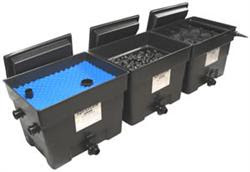
Pic.2. Comercial Filter Structure
Once the filter capacity and pump flow rate have been established, the filtration stages must be designed. Filters work best if they consist of numerous stages, with each stage specially designed to accomplish a filtration task that the others can not. Having such specially-designed filter stages will allow all harmful wastes and debris to be removed effectively.
A filtration system usually has a couple of stages for mechanically filtering out suspended debris,
and another couple of stages for biological filtration of the water.
1. Mechanical filtration , consists of physically trapping the particulate wastes and debris in the water.
Sand, beads, pads, and brushes are the commonly-used materials for mechanical filtration. Passing the water through these materials traps whatever suspended materials are in the water, e.g., leaves, twigs, fish feces, etc. The first mechanical filter stage usually uses brushes as the trapping medium, because these only trap the relatively larger debris in the water, allowing the smaller ones to pass through.
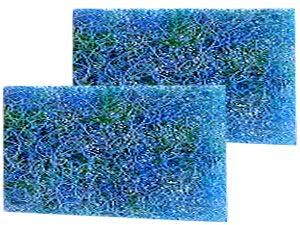
Japan Filter Matt For Mechanical Koi Pond Filter
The second mechanical filter stage usually uses Japanese filter mats, beads, or sand to trap the smaller particles in the water. More mechanical filter stages may be added, with the trapping size getting smaller as the filter stages progresses.
2. Biological filtration, as the name implies, employs natural biological processes to convert the harmful wastes excreted by the koi and those produced by decaying plant matter in the pond into less invasive compounds.
Koi excrete ammonia, which is deadly to koi in large doses. Certain anaerobic (non-oxygen-breathing) bacteria convert ammonia into nitrites, which are, unfortunately, also poisonous to koi. The good thing is, there are 'good' aerobic (oxygen-breathing) bacteria that convert nitrites into nitrates, which are no longer deadly to koi.
These 'good' bacteria are also known as nitrifying bacteria. Nitrifying bacteria occur freely in nature, and will populate your pond in time.
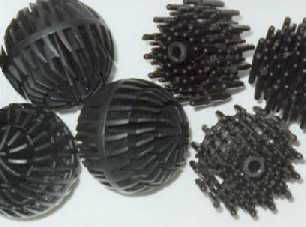
Bioball as Biologicall Filter Koi Pond
Biological filters usually use bio-balls, sintered glass, porous rocks, ceramic rings, or synthetic high-surface area particles as filter media. Biological filter media are designed to have as much surface area as possible for a given volume, in order to maximize the good bacteria population within the filters.
3.Chemical Filtration
Chemical filters make use of activated carbon as a filtration media that helps absorb chemicals. The carbon used can be cleaned in salt water and reused again. It is important not to use salt water in your pond when using a chemical filter as it might release some of the ammonia. Chemical filtration involves purifying the koi pond water of harmful chemicals by chemically binding them to the filter media. This method of filtration is extremely useful to remove chlorine, pesticides, heavy metals, ammonia and other chemical impurities from the pond water. Chemical filters can help improve the pond clarity and remove pond odor.
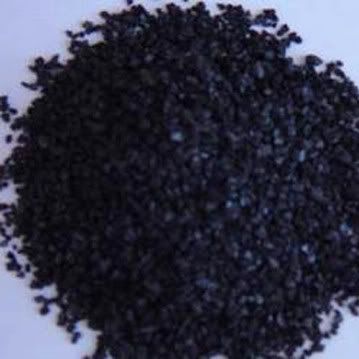
Activated Carbon as Chemical Filter Koi Pond
4. Bottom Drain
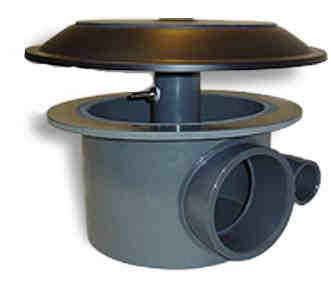
Bottom Drain
Bottom drain is a drain at the bottom of the pond where dirty water is sucked by the pump for transport to the filter chambers. The bottom drain is normally placed at the center of the koi pond, and should be the lowest point on the pond bottom. Thus, the entire pond bottom surface must slope towards the bottom drain. Pond with no bottom drain will need frequent cleaning of its floor.
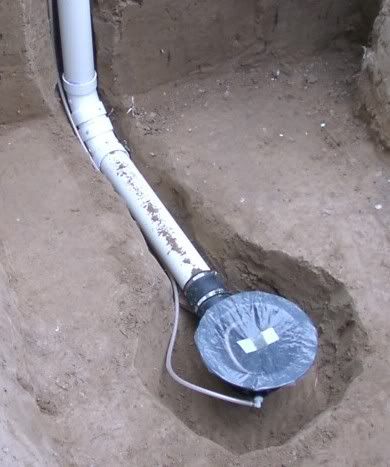
Installing Bottom Drain to the pond
5. Ultraviolet Lamp
Ultraviolet lamp systems for killing algae may also be considered if green water is a persistent problem for you. In fact, many koi experts consider the uv sterilizer as a 'must-have' item for successful koi keeping .These are usually placed before the mechanical filters since uv light makes dead algae clump together. Not All Pond filter design need uv light to keep the water clear though, so you may want to go for this as well. If Biological Filter in the koi pond can't work in maksimum condition UV lamp can help reduce algae in our koi pond.
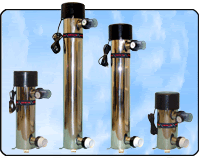
Ultra Violet Lamp
6. Surface Skimmer
Surface skimmers for removing wastes on the surface of the Koi pond will also be required by your pond. There are floating particle in the surface of koi pond from Koi feces, food etc. If not cleaned not good for water quality. Survae skimmer can remove it.
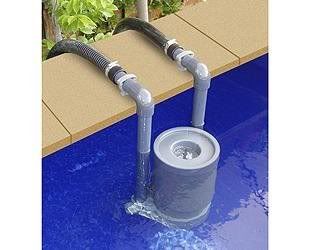
Floating Surface Skimmer Koi Pond
REFERENCE
1.Koiandpond
2.Abcpond
3.koicymru
Wednesday, May 6, 2009
Vortex Chamber For Koi Pond

Vortex chambers has recently become very popular that is used today and has been used as part of the main filtration system now for many years. The cone shape of the filter design aids in the settling of debris and ensuring gentle action of the dissolved waste throughout the filter process. Many People said they cannot work because it requires very high revolutions for sufficient centrifugal force to be generated. The efficiency of the unit does depend a lot on it's design, especially the diameter, height, and especially the positioning of the inlet and outlet pipes. The pumping rate can also be very important.
If you have any doubts about the efficiency of a vortex chamber then do try to visit a pond keeper that has one in use as I am sure you will be quite impressed with it.
Careful thought must be given to the correct size of your vortex chamber(s) when designing your koi pond, taking into account the necessary pump rate.
How Vortex System Operate

This rough sketch shows the basic idea for the Vortex chamber. The inlet from the bottom drain passes through the inlet just above the cone section of the chamber. The inlet is positioned so that the water flows around the side of the vortex, and then rises up and out through the outlet at the top, and then passes into the next chamber of the filter.
The solids will then fall to the bottom of the cone, and can then be flushed away several times a day.
Used as Primary chamber, fits into the filtration system as the 'First Line of Attack' ... and should be placed at the front end of the filtration system .. Normally the water from the bottom of the pond - together with waste and other debris is fed directly into this via the 4" or 110mm pipe from the Bottom Drain where it then adopts a 'spiral' motion inside the vortex chamber.

This allows the waste and debris to settle into the bottom of the vortex chamber where it then collects at the conical end of the vortex - waiting to be 'Flushed' via the Slide Valve which should be fitted to the external pipework that has been installed as part of the filtration system . Please note that for 'Gravity Fed' systems the water level in the pond should be no more than 1/2" from the Top edge of the Vortex Unit with the pump switched off. less if you can manage it. So if preparing a solid or concrete base for your Vortex units to stand on the base should be laid at the height of the vortex less 1/2"or less
Advantages to a Vortex Filter system
1.Vortex Filter Systems remove undisturbed solid waste before entering the pond's pump. The majority of other pond filter systems "puree" the solid waste from the bottom of the pond through the pump, creating a more heavier load for the filter system.
2.The Vortex System is an "open bed" allowing for atmospheric oxygen to interface with the surface water in the filter chambers, thereby acting as an oxygen supply safety net during power outages.
3. Closed, or pressurized filters, by design, can lose all of the dissolved oxygen present at any given moment in time if the flow is stopped. This process of oxygen depletion in many environmental cases can occur within an hour's time.
4. All systems have some unwanted, undesirable anaerobic environmental conditions which can "biologically bloom", given the circumstances. Example: a pressurized filter system operating at full capacity during hot weather conditions, loses its flow of water (and its source of dissolved oxygen).
5. The small population of anaerobic bacteria always present, but subdued can now flourish in an environment which is quickly becoming ideally suited for their populations to increase. As anaerobic populations increase, aerobic bacterial populations decrease. 6. When the pressurized filter begins to flow again, toxic waste products (hydrogen sulfide - rotten egg smell) from the now-active anaerobic bacteria flow into the pond.
Three Chamber Vortex

Exit the pond: The water should exit the pond (drain) from its deepest point, where most of the heavy debris will have settled. Obviously, the best thing to do is get rid of the heavy debris before transferring the remaining waste to the useful bacteria, in the biofilter. The water should be gravity-fed to the filter chambers. The flow rate should be low enough to allow the heavier solids to settle within the chamber and great enough to allow a complete water turnover every 2 hours or so. (The efficient match between pond design, pump selection and filtration system is essential.)
The first chamber: The water enters the settling chamber, which is shaped something like a cone, on a tangent to the cone and therefore begins to swirl in a vortex. This gentle swirling action encourages the heavy debris to sink to the bottom of the cone, where you can simply open the drain for ease of removal. The water then proceeds from the lower portion of the cone, wells up and exits through a port in the uppermost portion of the chamber.
The second chamber: The water then enters the second chamber, a prefilter. The prefilter contains filter media - such as filter brushes, which filters out some of the finer debris which gets by the first chamber. Now this filter media is likely to get rather mucky, in time, so it is beneficial that this filter brush media is light and easy to clean.
The third chamber: The water then proceeds in the same low to high path, past the baffle into the third chamber, the main biofilter. The main biofilter contains filter media which millions of bacteria call home. Here's where the dissolved waste products, primarily ammonia, meet the bacteria. The main portion of the nitrogen cycle takes place here.

Example Pond Design With Vortex System

REFERENCE:
1. http://www.koicymru.co.uk
2. http://www.aquaart.com
3. http://www.koiofindonesia.com
4. http://www.koifooddirect.co.uk
Wednesday, April 29, 2009
Tuesday, April 28, 2009
Pond Depth And Koi Growth

Pond depth also needs to be defined. A pond 2 meters deep is considered deep. A pond 3 meters deep is considered a tourist attraction. A pond 1 meter deep is considered shallow by many enthusiasts. Ponds below 50cm should not have Koi in them. I agree, however, there are many Koi keepers who have ponds and water features that are 50cm deep. They have Koi living quite happily in them.
We can confidently define a deep pond as a pond that is 2 meters or deeper. Shallow ponds are defined as 80cm - 1.2 meters in depth. Anything in between is a medium depth pond.
What is a problem with temperature, and this has been widely published in the UK, is the length of winters. In order to bring some relief to Koi in long, cold winters, deep ponds are made. At 4*C a peculiar thing happens to water, an inversion takes place. The "colder" water rises and the "warmer" water sinks. This is why ice floats. The middle water is then drawn to keep the lower levels stable and undisturbed. The Koi can settle in the lower regions and wait out the winter months in a state of semi-hibernation.
The other information regarding depth and growth is split into camps of different opinions. One claims that the vertical swimming provided by depth is very important for growth and body shape. Another camp claims that it is the increased water pressure of deep ponds that influences body shape during growth. And another opinion is that the air bladder needs depth - i.e. pressure. There is one further theory I have come across about depth - Koi need depth because they have to stand on their tails to feed. The exponents of this latter theory claim that because Koi cannot stand on their tails in shallow ponds they cannot feed properly and consequently do not grow (??!).
Depth will affect body shape to a certain degree, as the muscles exercise against the pressure. Depth will possibly strengthen the air bladder but can someone please explain the theory of vertical swimming having an influence on body shape and growth? Exactly how does swimming vertically improve body shape? Even in the east there does not seem to be consensus on depth amongst enthusiasts as Takayuki Izeki made a statement in Nichirin - " if water is deeper (2 meters) the water pressure hinders growth and a good body shape cannot be hoped for."
Another factor not mentioned with regard to pond depth is that, in some countries, it is much cheaper to dig down an extra meter to increase water capacity than it is to extend the surface area for the same purpose.
Perhaps we should reach common ground. Is water temperature essential for growth? Yes. We know Koi do not grow in low water temperature. It is easy to see that there will be no growth in a deep pond with a water temperature of 5*C. However, there will be growth in a shallow pond with water temperature of 25*C. Common ground has been reached. Temperature is essential for growth.
Is oxygen essential for growth? Yes. The examples in the above paragraph apply here as well. I have come across an interesting claim that it is very difficult to grow jumbo Koi on the high veldt in South Africa (6,000 feet above sea level). If I recall correctly, this persons definition of a jumbo Koi was 75cm or bigger. It was maintained that we cannot get enough oxygen into the water. About 20% less oxygen can be dissolved into water on the high veldt than at the coast. Couple this with the high water temperatures we get in our ponds and he could very well be right. (both altitude and temperature affect oxygen levels in water).
Is water quality essential for growth. Yes. If the water quality is poor your Koi will probably not be growing because they are dead. Jokes aside, water quality is applicable in all circumstances.
Is food, or more specifically nutrition, essential for growth? Yes. A group of Koi in a deep pond that never receive any food will not grow. Koi in a shallow pond that do receive food will grow.
Nutrition from birth is possibly the most critical factor in achieving growth other than genetics. Plus the closely interconnecting factors of oxygen, water quality and temperature. I request readers to re-read some of the statements I made in the article on Koi nutrition. One of the most important was - people are underfeeding their collections on quality food, which is one of the main reasons why they do not get growth.
It is a fact that Koi keepers are growing Koi to 70 and 80cm, with very reasonable body shapes, in "shallow" ponds of about one meter. It is a fact that jumbo Koi of above 70 - 75 cm are rare, both here and in Japan. Yes, some society members have visited very wealthy Koi keepers in the east with ponds full of high quality jumbo Koi, but relative to the total numbers of Koi in the world and relative to what we can afford in South Africa, jumbo Koi are rare. Recent personal discussions with Takeda san produced the following reply to the question - how many good quality jumbo Koi are there in Japan? The reply - maybe a thousand.
This brings us to the crux of the matter - my statement - I have never considered depth to be critical in achieving growth (size). Depth may have a minor influence on body shape of some Koi. Depth may have a minor influence on the rate of growth in some well fed Koi. But a deep pond cannot and will not guarantee you size. In most cases depth can easily be compensated for by exercising the Koi against a current to achieve the ideal body shape. While it is wonderful to have the best - i.e. a pond of 2 or 3 meters deep, is this pond depth critical to the growth of the fish? The answer is no. There are other factors that can be classified as critical to growth.
At some point we must ask ourselves - do we want to attract people to the hobby with reason and reality? Not everyone wants or can afford a tourist attraction. Not everyone wants a pond with hundreds of thousands of litres of water. We therefore, have to weigh up the pros and cons of recommendations on pond specifications from a practical point of view that will accommodate the wishes, needs and budgets of the vast majority of Koi keepers.
Reference:
1.http://www.japanese-koi-fish.com/chris%20on%20koi/koi%20pond%20depth%20part%202%20facts.htm
2.http://www.raleighlandscape.com/Watergardens%20&%20Koi%20ponds.htm
Subscribe to:
Posts (Atom)